
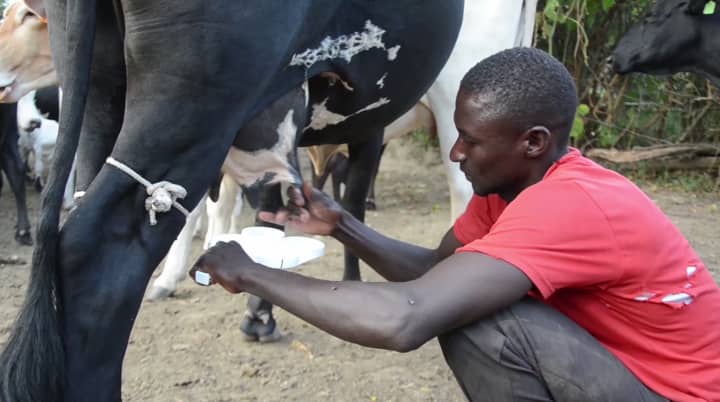
The Catholic Diocese of Masaka, through its development arm Maddo Dairies Limited, has launched an ambitious agricultural transformation programme aimed at improving dairy production and livelihoods for more than 7,000 farmers across the Greater Masaka sub-region.
The initiative seeks to modernise livestock and crop farming, increase household incomes and promote sustainable agricultural practices among farmers through improved skills, technology and access to support services.
The programme was officially launched in Masaka City during a training session for agricultural extension workers and veterinary officers, who will serve as trainers and mentors for farmers participating in the project.
The initiative is being implemented by Maddo Dairies Limited in partnership with Heifer International and Agribusiness Initiative (aBi) as part of a nationwide effort to strengthen Uganda’s dairy value chain.
Under the programme, Heifer International and aBi are working with three dairy partners — Maddo Dairies Limited in Greater Masaka, Jesa Farm and Pearl Dairy Uganda — to improve milk production and enhance dairy farming practices.
Maddo Dairies has been tasked with supporting 7,000 farmers in the Greater Masaka region through training, technical assistance and farm inputs.
Before the programme rollout, the partners conducted community assessments and registered farmers who require support to improve their livestock and crop production.
Beneficiaries will receive training in modern animal husbandry practices, pasture establishment, animal nutrition, breeding and farm management aimed at increasing milk production.
The project will also promote the adoption of clean energy solutions, including biogas systems for household cooking and the use of bioslurry as organic manure to improve coffee and other crop production.
The Director of Maddo Dairies Limited, Rev. Fr. Peter Ssenkayi, said the programme is designed to support all farmers regardless of gender, religion or social background.
“Our goal is to help farmers who currently get only two litres of milk per cow increase production to at least ten litres through improved feeding, better animal management and modern farming practices,” Rev. Fr. Ssenkayi said.
He noted that the Greater Masaka region has a strong market for milk, urging farmers to embrace improved production methods to take advantage of existing opportunities.
“There is a huge demand for milk in this region. We want our farmers to produce more so that they can earn better incomes while satisfying the available market,” he added.
Rev. Fr. Ssenkayi said the programme will also encourage farmers to form cooperatives to strengthen their bargaining power, improve access to markets and financial services, and promote collective growth.
“Working through cooperatives will enable farmers to grow together, access services more easily and improve their livelihoods,” he explained.
He urged agricultural extension workers and veterinary officers who received training to ensure the knowledge reaches farmers at the grassroots level.
“The success of this programme depends on how well this knowledge reaches ordinary farmers. We expect you to become ambassadors of modern agriculture,” he said.
Rev. Fr. Ssenkayi commended Heifer International, aBi and other development partners for supporting agricultural transformation in Greater Masaka, saying the Diocese had committed resources towards ensuring the success of the programme.
The trained agricultural extension workers and veterinary officers welcomed the initiative, saying it would help farmers adopt modern farming methods, increase productivity and improve household incomes.
They said the programme would contribute to strengthening the dairy value chain while addressing challenges affecting livestock farmers, including low production, limited technical knowledge and inadequate access to improved farming practices.
